
For some it's a topic of regular intrigue but for most it's just not spoken about, and it should be - our poo matters! More than 4 in 10 people suffer poor digestion and 1 in 4 suffer from IBS, and our poo says a lot about our gut health. If our poo doesn't feel or look right, our health isn't right, but we can do something about it through our diet and gut health supplements.
There are 7 types of poo. Here we explain them, why poo matters, and how the perfect poo should look. Also take a look at 'Latest gut health research: IBS causes and symptoms revealed' and you may also enjoy '6 signs of an unhealthy gut' and 'Is period poo a real thing?'.
Over 70% of your immune system originates in your gut. Your gut is critical for your brain health via the 'Gut Brain Axis', and your gut health is one of the biggest factors in how your skin looks and feels, your energy, concentration, bloating, stress, sleep and more.
Research shows you're nearly twice as likely to suffer poor skin, weaker hair and a lack of energy if you suffer from just mild IBS. You're also more likely to suffer higher levels of stress, struggle to concentrate and focus, and suffer from poor sleep and insomnia if you have digestion issues or IBS. Eliminating toxins, organisms, bad bacteria, fungi and parasites from your body through your poo is vital for your overall health. Learn more in '6 signs of an unhealthy gut'.
The colour of poo matters. Properly digested food will exit the body as a medium brown colour. If your poo is pale or yellow, this is an indication that you are not digesting or absorbing fat effectively. Yellow and pale poo can be the result of undiagnosed and untreated gut issues such as coeliac disease or a lack of lipase (fat digesting enzymes). Coeliac disease is the most common gluten intolerance condition.
If your poo is consistently very dark it is generally a sign you should see your doctor because it can indicate an issue such as an ulcer in the gut. However if you are taking medication from your doctor that contains Iron, then having dark or black poo is normal. The colour should return to a medium brown after you've finished your medication - if it doesn't, consult your doctor.
The ideal poo is smooth, without cracks. This would indicate that you are consuming enough fibre and have enough probiotics in your gut to metabolise your food effectively, as well as enough water to keep you hydrated. Cracks on the poo indicate you're dehydrated and need to drink more, or eat more fibre. Learn more in 'What are probiotics' and discover the best probiotics for IBS.
The ideal poo will be a sausage shape. This indicates there is enough fibre and water to sweep the bowel clean. Having soft blobs is also healthy as long as they are mid-brown and do not float. Floating poo is a sign of poor gut health.
'Floaters' are a warning sign of poor absorption of fat. If the poo is yellow as well, then it indicates a bigger problem. If the poo is brown, then it is probably a smaller issue, however your diet and digestive enzymes would still need to be reviewed. If your poo sinks quickly on the other hand, such as when you have diarrhoea, this can be an indication of mineral malabsorption. Your poo should gently sink to the bottom of the cistern.
It's natural your poo will smell, but if it is really offensive then there could be a problem. This can indicate that your food is not being digested or absorbed properly, or a possible gut infection including bacterial, viral or parasitic infection. In either case, you should get this checked out.
'The Bristol Stool Chart' was designed to make it easier for patients to discuss their poo with their practitioner - it's easier to pick a number than to sit in a chair and describe your poo. It also helps you know what is normal, and what isn't. There are 7 types of poo in the Bristol Stool Chart:
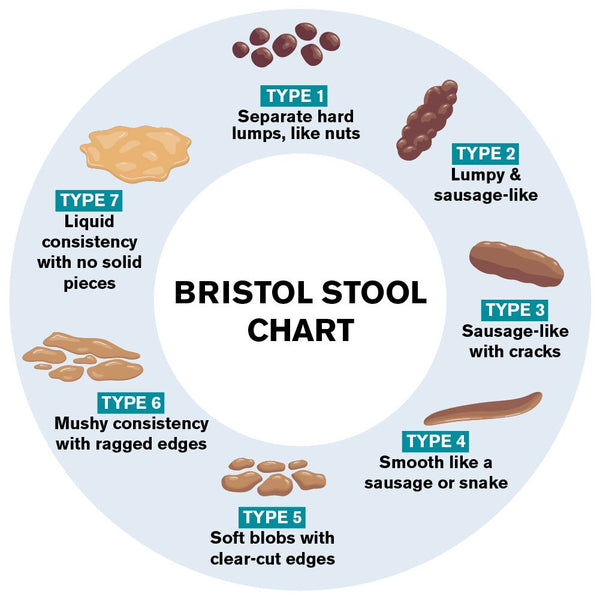
This means you are constipated and need more fibre, water and probiotics.
This means that you should look again at adding more water, fibre and probiotics to your diet.
This is an improvement on #2, however a small tweak in the amount of water you consume wouldn't do any harm.
Congratulations, you have the perfect poo!
This is another example of a great poo!
This is mild diarrhoea, and you need to address the level of probiotics in your gut.
This is diarrhoea and if this does not resolve itself within a few days, you should get this checked by your GP.
Aside from these signs to look out for in your poo, there are other potential indicators of health issues in your poo.
Small hard balls of poo that are hard to pass are a sign of constipation. This can be the result of a number of reasons including lack of fibre, dehydration, not enough probiotics in the gut, or due to conditions such as an underactive thyroid function and poor gut motility.
Increase your hydration, eat more water soluble fibre from fruits and vegetables, and try taking gut friendly bacteria through your diet or a probiotic supplement. Exercise also helps relieve constipation as it gets the gut moving. If these tips don’t help, ask your doctor to investigate further. Learn more in 'Why you should improve your gut health'.

Discover GlucoBalance® | Advanced Blood Sugar Control
This is a sign of irritation in the gut and often accompanies infections or auto-immune diseases of the gut. It may also be due to poorly broken-down food or an overactive thyroid, also known as hyperthyroidism. More than 30% of people suffering IBS will experience diarrhoea - learn more in 'Latest gut health research: IBS causes and symptoms revealed'.
Incontinence is the inability to control your bladder or your bowel and on first signs of incontinence, you should consult your doctor. Bowel incontinence may be due to a number of factors including an anal prolapse, weak pelvic floor muscles, inflammatory bowel diseases, problems with the spine, severe haemorrhoids, or after childbirth. It isn’t something that you need to put up with and you can get help, so make sure you do.
Although a taboo subject in many cultures, poo and your gut health is something your doctor deals with every day. To a doctor, discussing your poo is as normal as discussing the back of your hand.
If you have a sudden change in bowel movements, it is important to discuss this with your doctor. Sometimes the first sign of irritable bowel diseases (IBS) or bowel cancer can be a sudden change in bowel habits. Although it could be many other things, such as a bug or irritation of the gut, speaking to your doctor can provide you with peace of mind. Learn more about the common and unusual symptoms of IBS.
If there is blood in your poo, either fresh, or older (making the poo black), it is essential you tell your doctor immediately.

Your poo says a lot about your health, and your diet really can make a difference so don't be ashamed, keep an eye on your poos. Supplements such as pre & probiotics with gut friendly bacteria can also help.
Use your poo as a good indicator of your gut health and overall health and wellbeing, and it's a good thing to strive for perfect poo! If you notice sudden changes in your poo, or persistent symptoms that don't feel right, or if you're at all concerned, make sure you consult your doctor.
Discover our award-winning probiotic for IBS, Gut Works®.
View our range of vegan supplements and vitamins.
*DR.VEGAN research into gut health was conducted among 2,331 adults between August 2021 - January 2022. Nationally representative.
Shop our range of vegan vitamins and supplements.
Want to hear more from our nutritionists? Sign up to our free newsletter:
Your shopping basket is empty. Wondering which supplement you should take?
Our expert Nutritionists are here to assist you.


Subtotal
£0.00
Shipping and taxes calculated at checkout.


